Observations and insights from along the project journey: case Maailmanpuu
Born from the idea of a “Biokuitulaakso” (“ Biofibre Valley”), the Maailmanpuu project has been underway since September 2025. It is still early for any interim conclusions, but even at this stage, the project has already surprised its project manager in many ways. The discussions held and the information gathered during the project have prompted many assumptions and preconceptions to take new directions.
Assumption 1: Business interests always override all other interests
In the Maailmanpuu project, and in the background discussions that preceded it, the idea of a “Biofibre Valley” and a shared development platform was approached primarily from the perspective of companies’ interests, and secondarily from those of research organisations. We were acutely aware that if the platform were built solely on principle, or for example from the perspective of “innovation policy,” it would almost certainly be destined to remain a short-lived initiative. A project like that only functions for as long as public funding is available.
Against this backdrop, one observation has become particularly striking: whenever people have come together to discuss the need for shared development and the challenges involved, there has without exception been a willingness to contribute from perspectives other than “hard business interests.” The desire to listen, to help, and to make a personal contribution to shaping a shared platform that advances the sector and, more broadly, Finland as a whole, has been remarkably strong. There is also a clear awareness of the sustainability crisis affecting everyone, and of the urgent need to find new, ever more environmentally sustainable solutions—ones that take biodiversity and the planet’s carrying capacity more fully into account. This is true even though the interests of companies and other organisations remain at the heart of designing the platform.
"It may sound like a cliché to speak of collaboration as a Finnish strength, but the thought is hard to avoid. I have come to realize that the challenge of sharing knowledge is not, in fact, especially difficult to overcome, as long as trust has been built and the rules of engagement are clear."
These observations are particularly pronounced in the bio-based and fibre industry, where issues such as the sharing of intellectual property have always been challenging, and confidentiality has been an exceptionally strong defining feature of product development. It may sound like a cliché to speak of collaboration as a Finnish strength, but the thought is hard to avoid. I have come to realize that the challenge of sharing knowledge is not, in fact, especially difficult to overcome, as long as trust has been built and the rules of engagement are clear. From the perspective of the Maailmanpuu platform, this provides a strong foundation for more effective sharing of expertise and innovation, and for the commercialization of new products.
Assumption 2: Academic freedom and the autonomy of science stop hinder or make collaboration with companies difficult.
The project manager has already worked with this assumption in earlier projects. Those projects explored, for example, how research-based innovations could be converted more effectively into business—into new products, services and companies. One of the key drivers behind the Maailmanpuu project is also the observation that even the most cutting‑edge innovation is often difficult to commercialize. In other words, the topic comes with its own specific set of challenges. In particular, collaboration between universities and companies is often framed by a basic assumption that business interests cannot, or must not, steer the autonomy of research. A frequently heard view is that, because researchers lack incentives for collaboration with companies and, for their careers, the number of scientific publications is a clearly more important metric, founding a start‑up, for example, is unlikely.
Something, however, has changed or is changing. As companies’ strategies and missions inevitably align more strongly with delivering solutions for the sustainability transition, research organisations also increasingly recognize business as a driver of change and as the commercializer of research results—one that ultimately ensures research impact. Discussions on collaboration with companies and on shared goals are therefore no longer difficult or uncomfortable, quite the opposite. There is still work to do, of course, but we can no longer point to a lack of willingness or understanding as the reason. Within the Maailmanpuu project, we will continue to develop solutions for more strongly integrating RDI activities with the needs of business and with commercialization processes.
Assumption 3: Breakthrough innovations inevitably lead to scalable business.
I already referred above to how even the commercialization of breakthrough innovations can be challenging. This challenge lies at the very core of the Maailmanpuu project. Bringing to market a new solution that takes environmental impacts and biodiversity better into account typically requires 5–10 years of development work and investments of 10–50 million euros. In the bio- and fibre-based economy, the discussion has traditionally focused on large material volumes, whose production naturally demands significant production plant investments. These in turn require substantial capital, which a start-up company, for example, does not usually have. The “missing piece” is the ability to commercialize a new innovation from laboratory scale to full commercial-scale production. This is precisely what the Maailmanpuu platform aims to address: a semi-industrial RDI platform that can cost‑effectively accelerate the pre‑commercial phase of new products.
"In the bio- and fibre-based economy, the discussion has traditionally focused on large material volumes, whose production naturally demands significant production plant investments. These in turn require substantial capital, which a start-up company, for example, does not usually have."
Over the course of the project, I have had to recognise for myself how diverse the challenges are that relate to commercialising an innovation that has already proven to work in research and laboratory settings. The opportunity to at least partly streamline the path by which new products and solutions—ones that serve all of us better—reach society is, however, a major source of motivation for everyone involved in the project. The less we collaborate, the more innovations we lose—innovations that we urgently need. At the same time, we strengthen competence, improve resource efficiency and build new, renewing business.
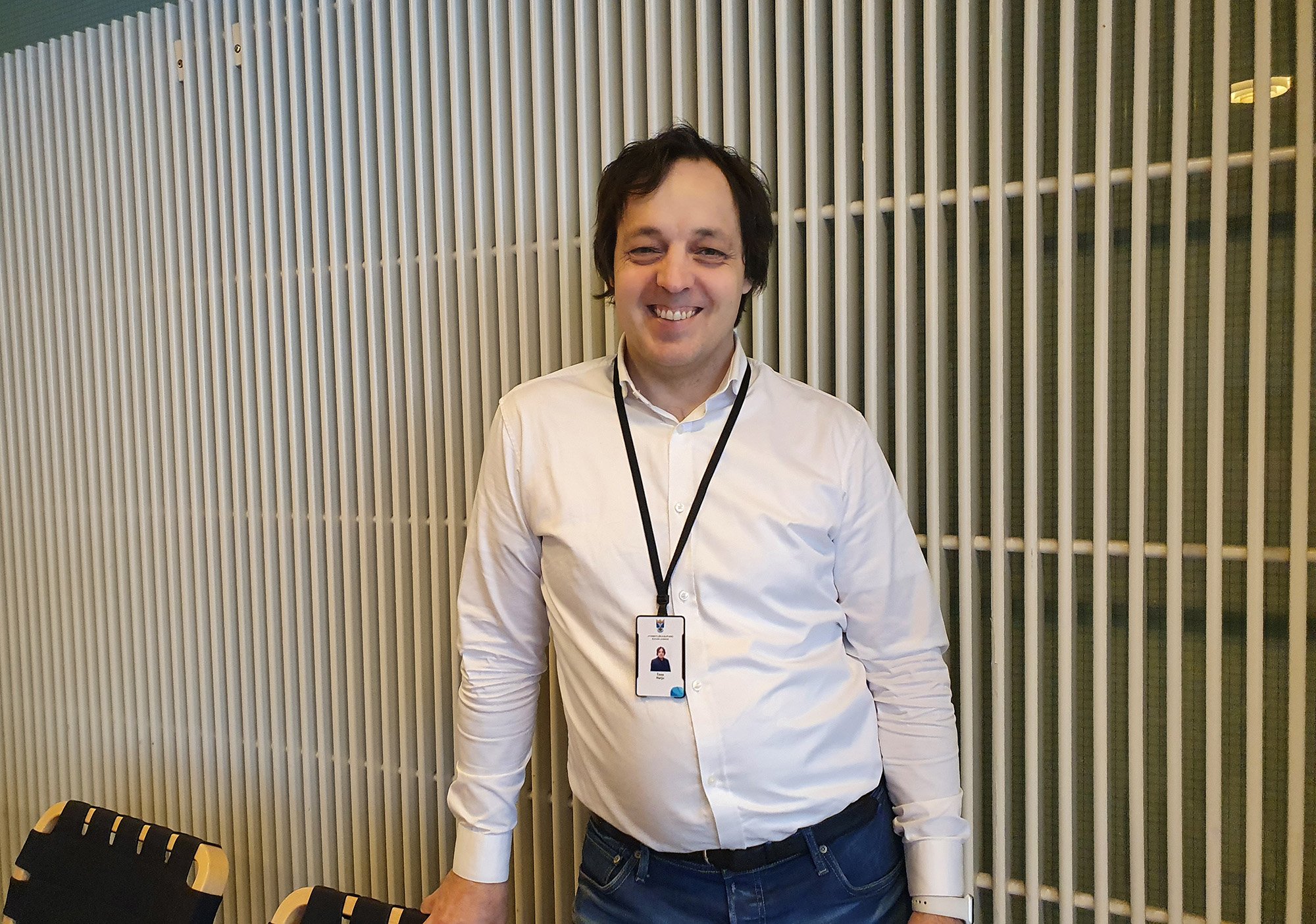
Timo Harju
Programme Manager of Industry Renewall Ecosystem
City of Jyväskylä
+358 50 5959198
timo.harju@jyvaskyla.fi
This article is part of the ecosystem work carried out by the City of Jyväskylä’s Business Development Services.
The ecosystem work is implemented with public funding under the Ministry of Economic Affairs and Employment’s Ecosystem Agreement for the years 2021–2027, in cooperation with local higher education institutions and other regional development organisations.
The project is funded by the Regional Council of Central Finland (ERDF funding).