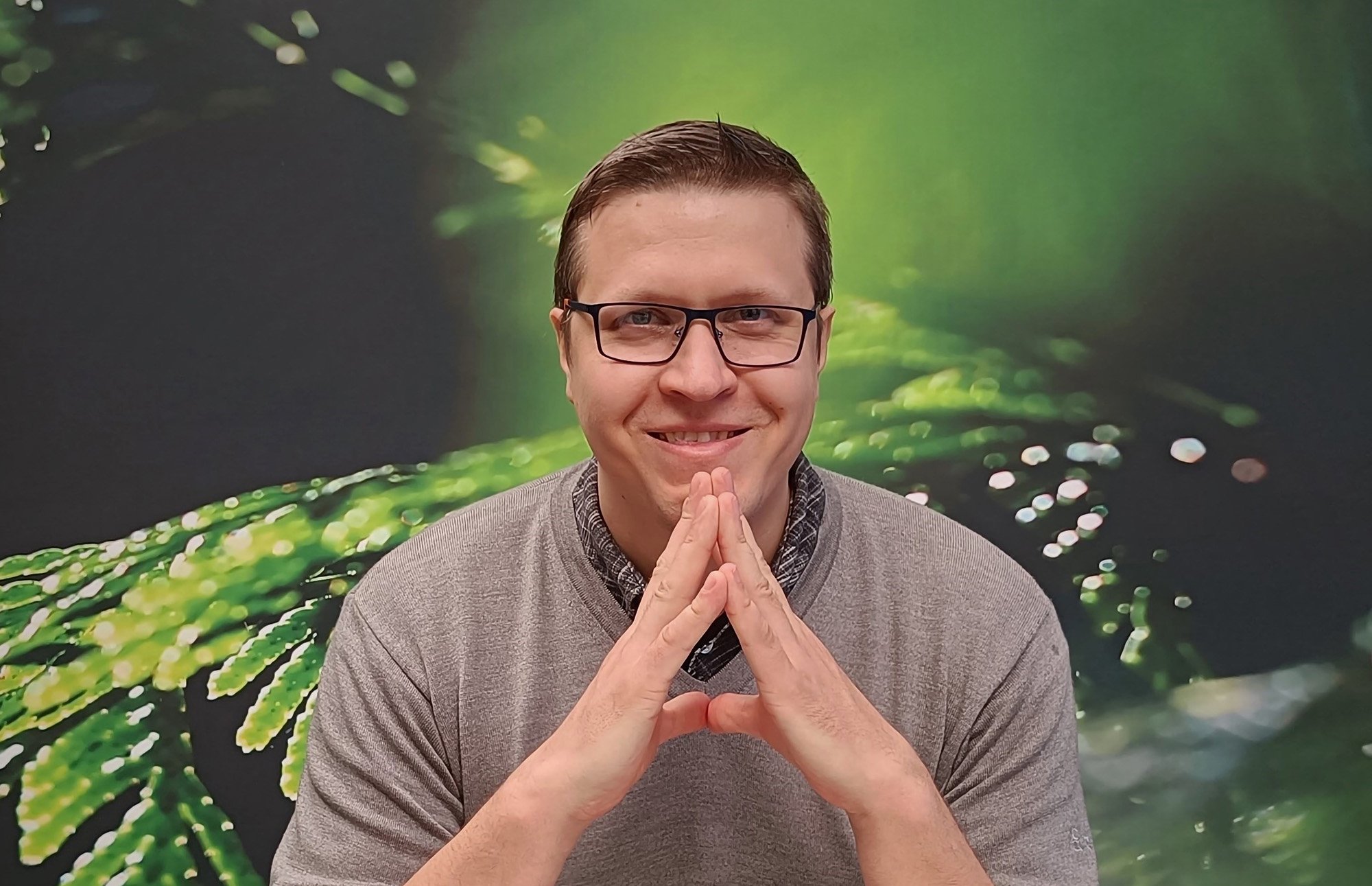
The journey of a new bio-based product from idea to commercialisation typically takes 5–10 years and, at worst, costs tens of millions of euros. Sampo Immonen, Head of Product Development at Valmet, believes that in Central Finland this can be achieved in as little as a third of that time. The prerequisite is that regional players step up their collaboration and abandon the notion that the best ideas are born in-house.
At Valmet, Sampo Immonen heads up product development for the paper and board machine product area, and his background at the company spans sales, technology, design, the service business and product ownership. From the start of October, he will take up the post of Chief Technology Officer at Spinnova. His perspective will change, but the subject matter will remain familiar.
Replacing plastic offers the greatest potential in terms of volume
Central Finland is known as a stronghold of the paper and board industry. Valmet and VTT in Jyväskylä, Metsä Group in Äänekoski and Spinnova, as a newcomer, form a bio- and fibre economy cluster that, according to Immonen, has few equals.
Many of the most interesting developments in the bio- and fibre economy lie outside the realm of traditional products. The greatest opportunity in terms of volume lies in replacing plastic in packaging: the outer surfaces of modern packaging are often already made of cardboard, but there is still a great deal of plastic inside.
There are also significant opportunities in the field of sustainable textile fibres. A great deal is currently happening in their development.
“There are both successful and unsuccessful projects. We are at a turning point in terms of which direction we will take in the bigger picture,” says Immonen.
No single company can tackle these challenges on its own
New initiatives in the bio- and fibre-based economy share three characteristics that make them exceptionally challenging. The journey from idea to commercial product takes 5–10 years. The sector is capital-intensive, as industrial-scale production always requires expensive manufacturing facilities. Success requires a combination of materials research, process technology, substantial investment and a customer willing to purchase the end product.
“These challenges are so complex that no single entity can easily cover the entire field. Not even a global technology leader in its field such as Valmet.”
Furthermore, very few players are prepared to bear the risk of a venture whose outcome will only become clear years down the line. By working together, it is possible to share the risks.
The Maailmanpuu network brings industry players together
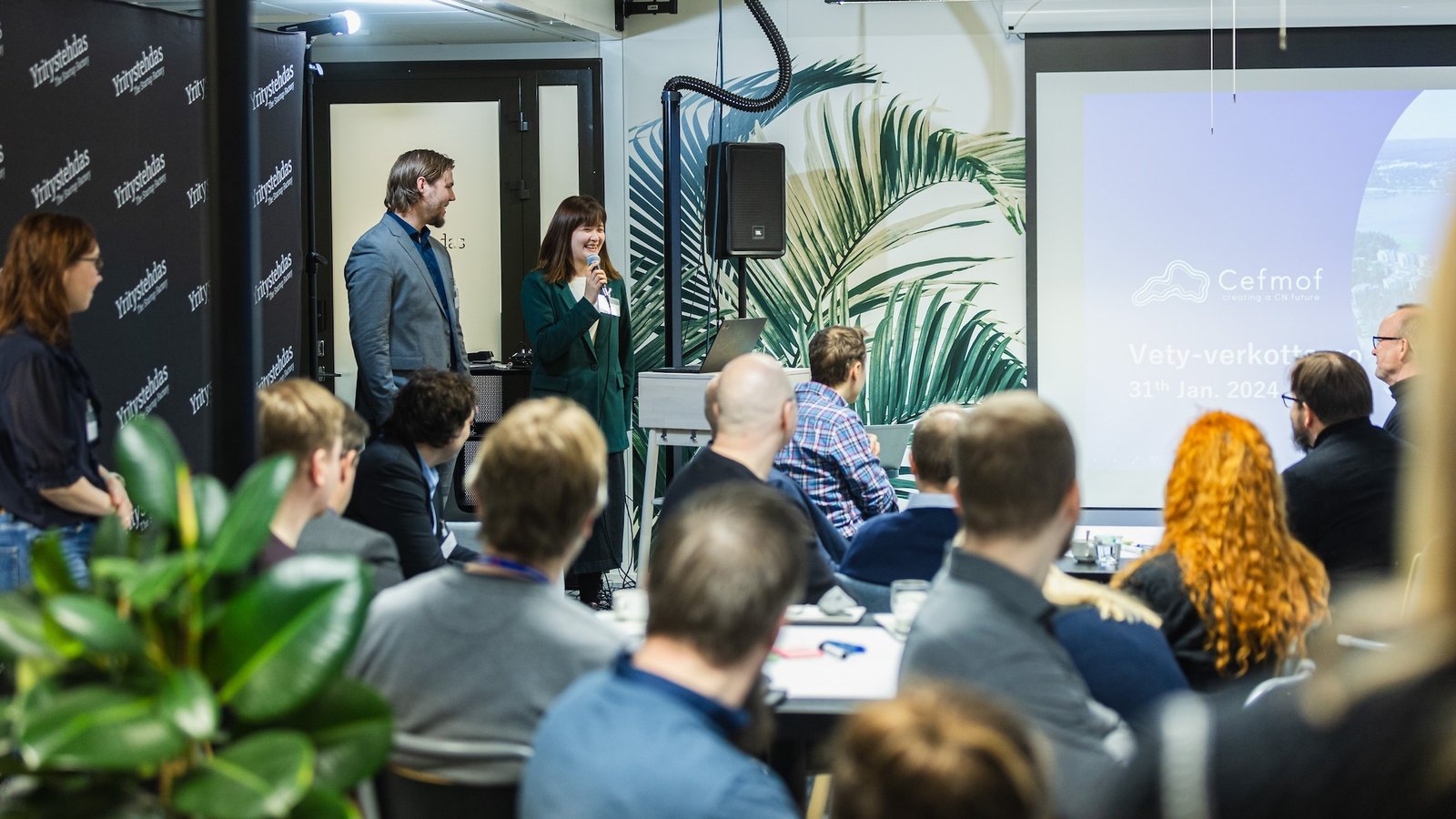
So what is the solution? According to Immonen, closer cooperation is needed; one example of this is "Maailmanpuu", a bioeconomy business and innovation platform currently under development in Jyväskylä.
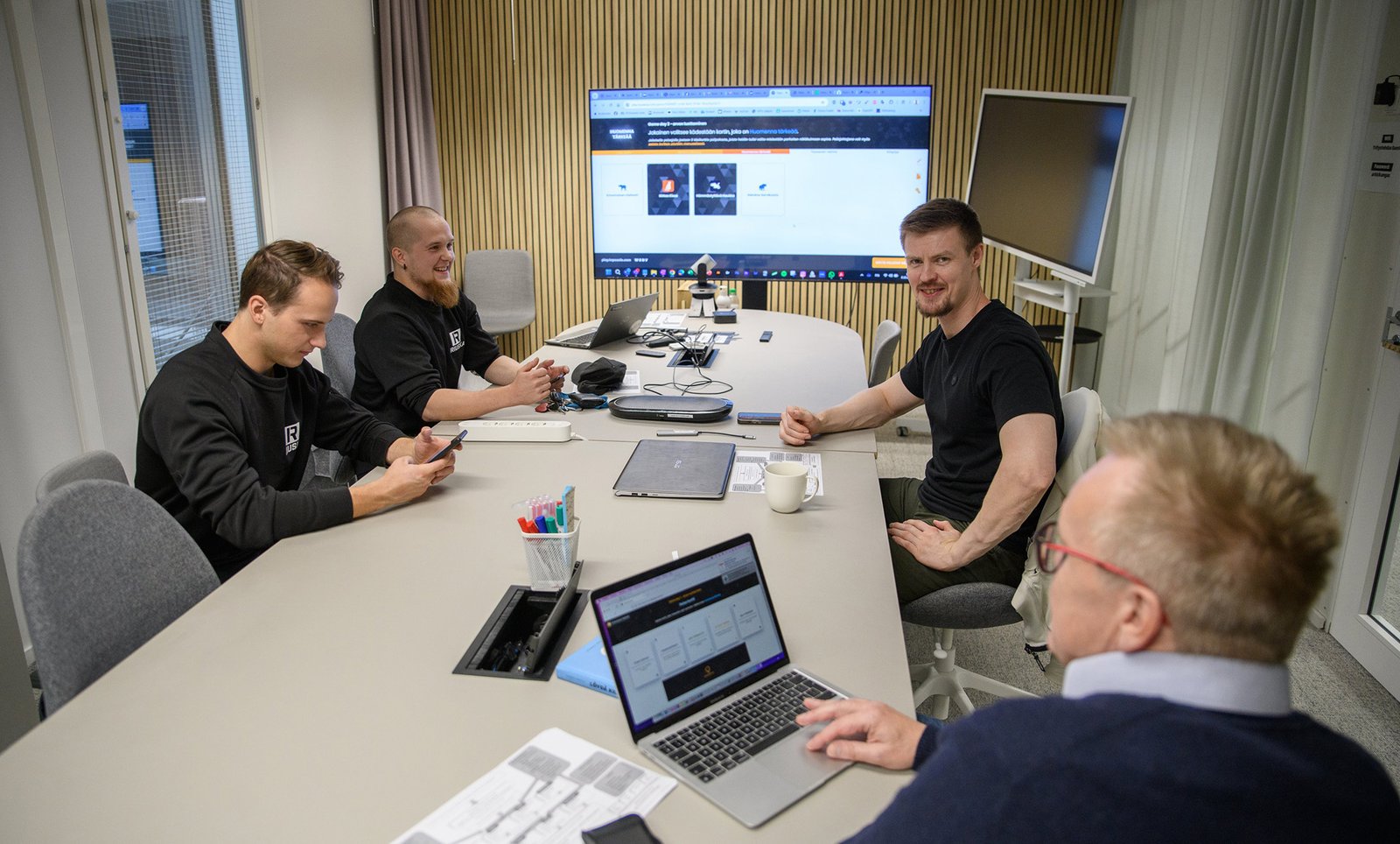
In practice, Maailmanpuu is a regional research, development and piloting platform that brings together research, businesses, piloting environments and funders under one umbrella. The key objective is to accelerate the commercialisation of new products. When stakeholders sit down together at the same table right from the outset, the feasibility of a project is assessed in one go and costly dead ends are identified earlier. Stages can also be overlapped, meaning that the next party does not have to wait for the previous one to be completed.
The Maailmanpuu collaboration aims to renew the conventional product development pathway. Traditionally, development has proceeded in stages: research, piloting, productisation and, only finally, commercialisation. Commercial assessments have been traditionally carried out only after years of development work and investment have already gone into the project.
“We cannot afford to assess commercial potential only after years of development work. The requirements of the customer, the market and industrial-scale production must be taken into account from the very beginning, so that the resources allocated to development – both public and private – can be utilised as efficiently as possible.”
For Valmet, the value of the collaboration platform lies in its potential to generate new industrial value chains, customer relationships and technology needs. The company’s role is not to own all the development ideas, but to contribute process, automation, piloting and commercialisation expertise to the collaboration.
“As new fibre-based products emerge, competitive technologies are also needed to manufacture them. This presents Valmet with an opportunity to grow its own value creation,” says Immonen.
A new mindset and AI could dramatically shorten development times
For closer collaboration to work, companies need to change their mindset, Immonen explains:
“We must move away from a ‘not invented here’ mindset. If we end up in overly small silos here, it will reduce our chances of succeeding in the big picture.”
If this shift in mindset succeeds, the benefit can be measured in the time taken for development. Evidence already exists: the development stages of Valmet’s 3D Fiber technology were deliberately overlapped rather than carried out sequentially, and the development cycle was halved compared to the norm. Immonen points out that this was the first attempt, and it did not go smoothly.
Once working methods become established and the potential of advanced simulation and artificial intelligence is harnessed, he believes we can go even further. The typical 5–10-year development cycle in the sector could be reduced to as little as one-third or one-quarter of the current development time.
Immonen believes that Central Finland has the potential to become an internationally recognised hub where new bio-based products are taken from concept to market faster than elsewhere. This will not be achieved by technology alone, but by the right mindset.
"This isn’t just about products, individual technologies or processes. It’s very much about how we work together – in other words, breaking away from old ways of thinking.”
If this transformation is successful, the benefits would not be limited to individual companies. Immonen believes that Central Finland could become an internationally attractive hub for the bio- and fibre-based economy, whose competitive advantage would be an exceptionally rapid transition from research to industrial production.
"Central Finland could develop an environment where the journey of new bio- and fibre-based innovations from the laboratory to industrial scale is faster than anywhere else. This would be an advantage for companies, for research and for the vitality of the entire region.”
More information:
Timo Harju
Program Manager of Industry Renewal Ecosystem
City of Jyväskylä
+358 50 5959198
timo.harju@jyvaskyla.fi
This article is part of the ecosystem work carried out by the City of Jyväskylä’s Business Development Services. The ecosystem work is implemented with public funding under the Ministry of Economic Affairs and Employment’s Ecosystem Agreement for the years 2021–2027, in cooperation with local higher education institutions and other regional development organisations. The project is funded by the Regional Council of Central Finland (ERDF funding).