When Sport Meets Startups: Inside Jyväskylä’s Growing Sport Tech Ecosystem
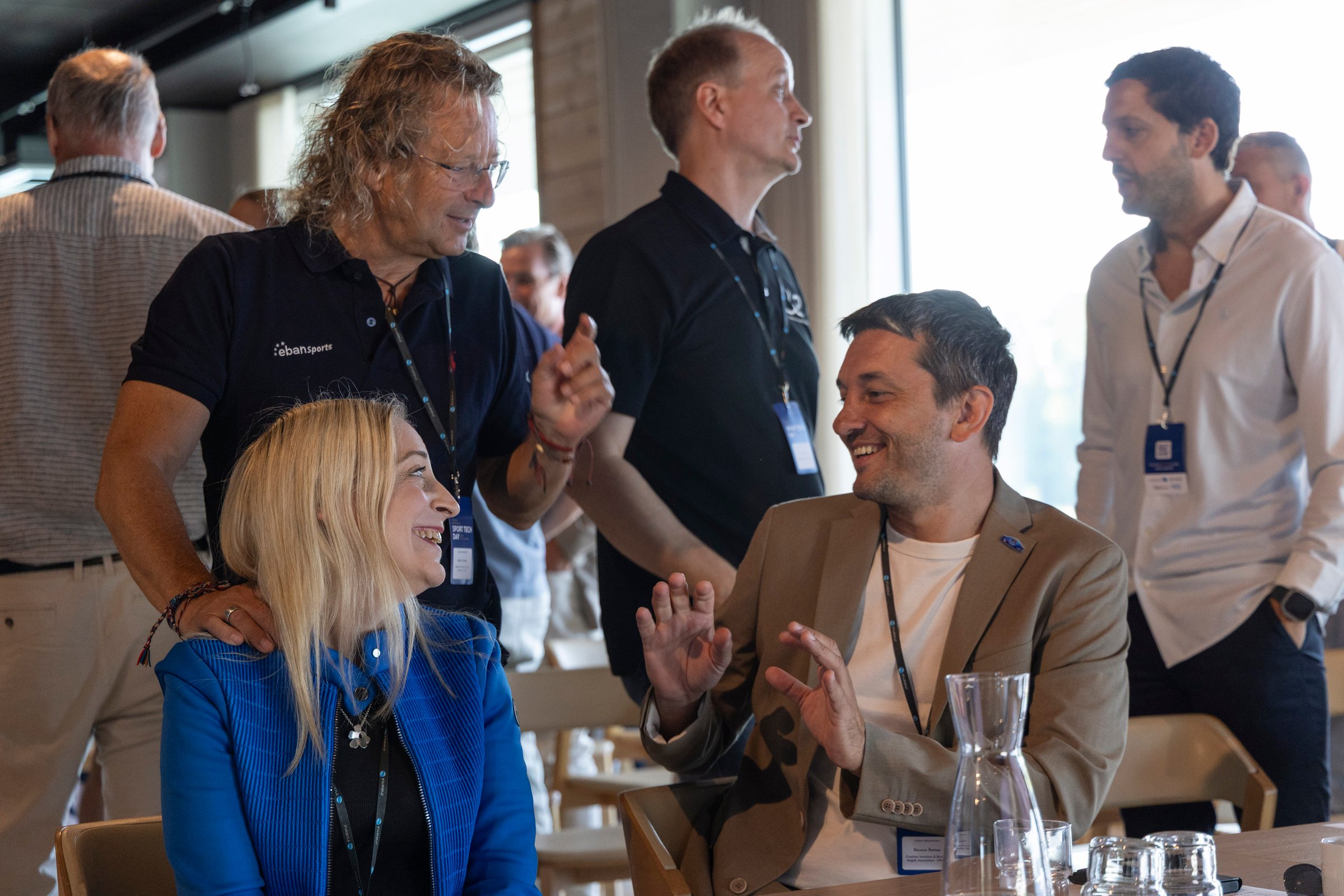
"There are some events where you leave with a few interesting ideas, and then there are events that make you look at a familiar city a little differently. Sport Tech Day in Jyväskylä was one of the latter for me. Sitting at Restaurant Viilu and listening to people from sports, research, startups, investment and technology, it became clear that the conversation was not really about technology in sport. It was about what could happen when all of these worlds start working together", Saad Saqib (International Coordinator at Jyväskylä Entrepreneurship Society) shares his reflections on Jyväskylä Business Rally Sport Tech Day 2026.
The event was part of the Jyväskylä Business Rally programme and brought together
sports and wellbeing technology companies, investors and international experts. It was
opened by Jyväskylä Mayor Timo Koivisto and Finland’s Minister of Youth, Sport and
Physical Activity Mika Poutala. Their presence was significant because the discussion
was not simply about individual companies or new technologies. It was also about the
direction of Jyväskylä and Finland’s wider sports ecosystem. The city is increasingly
positioning itself not only as a place where people exercise and compete, but as a place
where research, technology, entrepreneurship and sport can meet.
Startup culture and the athlete mindset
The first presentation that really set the tone for the day came from Riikka Pakarinen,
CEO of the Finnish Startup Community and President of the Finnish Athletics Federation.
Her central message was simple: startup culture is disciplined ambition.
That phrase stayed with me because it describes something that is ogsicften misunderstood
about startups. From the outside, startups can look chaotic. Plans change, ideas fail,
teams have to move quickly and there is rarely enough information to make completely
certain decisions. But behind that uncertainty there needs to be discipline. You
experiment, learn, listen to customers and keep improving.
Pakarinen connected this directly to sport. Athletes do not wait for perfect conditions
before they start training. They test themselves, analyse their performance, receive
feedback and adjust. The same principle can be applied to organisations. Start small,
learn quickly and do not be afraid to change something when the evidence tells you that
it is not working.
In many ways, sport can become a testing ground for solutions that eventually find much wider markets.
The comparison became even more interesting when she talked about the idea of
putting the customer first. In sport, that means putting the fan first. A successful sports
organisation cannot only measure how many people came through the doors. It needs to
understand why people came, what they enjoyed, what frustrated them and what would
make them want to come back. The fan experience is becoming a product of its own.
This is where technology has a real role to play. Data can tell organisations much more
about engagement. Digital tools can make experiences more personal. New services can
be tested and improved based on how people actually use them rather than on
assumptions about what they might want.
The presentation also touched on agile teams and the importance of giving people
enough ownership to make things happen. Clear responsibilities, open communication
and quick decision making are not only useful for startups. They can be just as important
for sports organisations trying to respond to a rapidly changing environment.
The more I listened, the more convincing the comparison became. Sport and startups
have more in common than it might initially seem. Both operate under pressure. Both
compete internationally. Both depend on talented people. Both need resilience. And both
have to keep improving if they want to stay ahead.
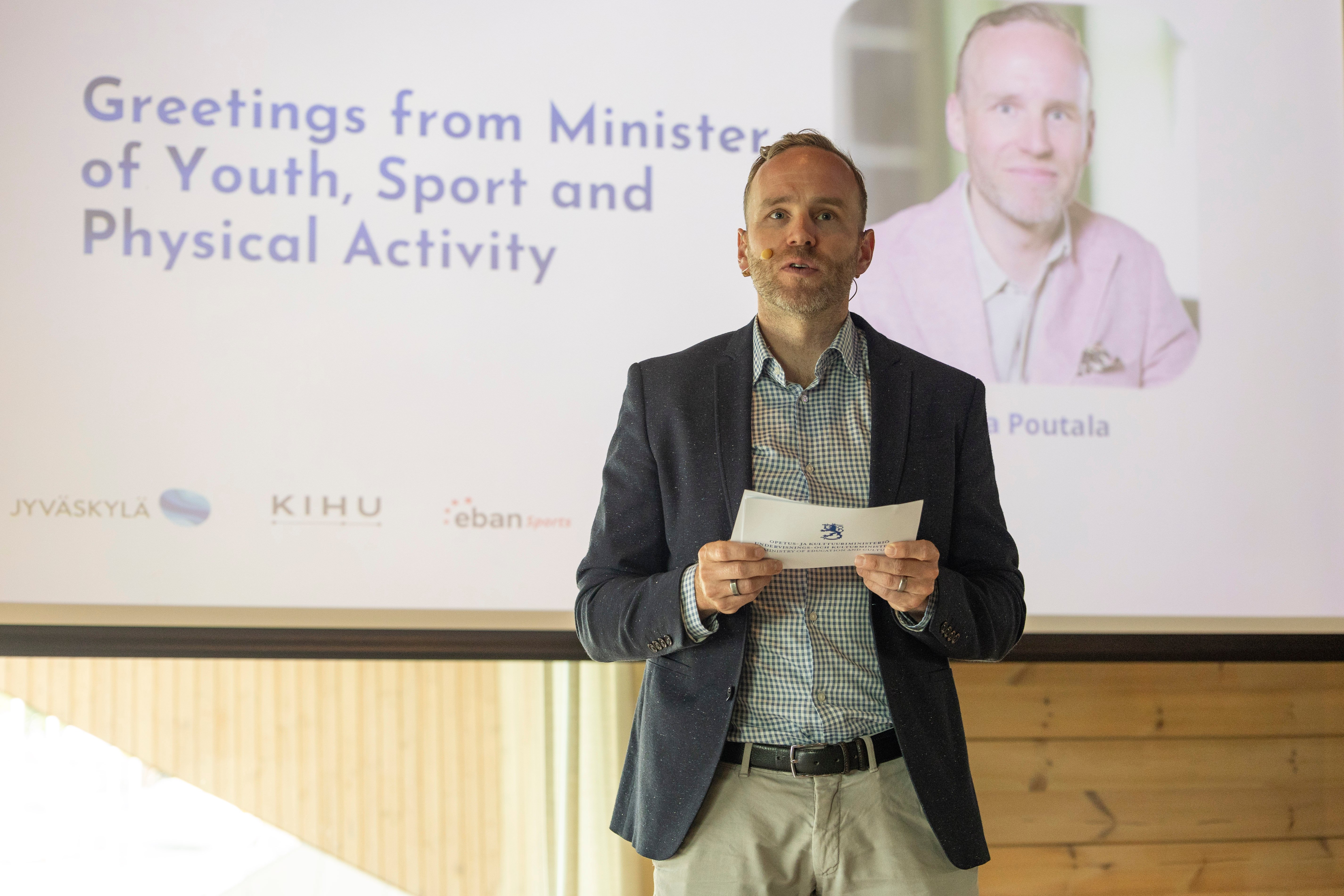 Mika Poutala, Minister of Youth, Sport and Physical Activity. Photo: City of Jyväskylä/Alpertti Rieskjärvi
Hippos as a sports and innovation hub
From there, the discussion moved towards one of the biggest developments currently
taking place in Jyväskylä, the transformation of Hippos.
What stood out was that the vision for Hippos is much bigger than simply building new
sports facilities. The ambition is to bring sport, high performance, research, education,
health, technology and business into the same environment. The new Hippos is being
developed as a large scale sports and competence centre, with research, education,
companies and innovation forming an important part of the overall ecosystem.
The presentation on research, development and innovation made that ambition
particularly clear. KIHU’s role is not simply about producing research and leaving it in
academic papers. The focus is also on collecting scientific evidence, integrating
knowledge and data, investigating challenges through multidisciplinary research and
translating that knowledge into the continuous development of Finnish high performance
sport.
The presentation on performance and health support showed how broad this work can
be. Sports biomechanics, performance coaching, mental coaching, sports physiotherapy,
sports medicine, sports physiology and game analysis all contribute to understanding
performance. When these areas are brought closer together, the athlete becomes part of
a much larger research and innovation environment.
Then came an international perspective through Aitor Jiménez from Baskonia Alavés
Group. His presentation on The Faktory showed what a modern sports innovation
environment can look like. The model goes beyond traditional sport and includes health
and wellbeing, sport technology, entertainment experiences, smart facilities and
education, supported by digital transformation, sustainable development and knowledge
generation.
That idea is important because the technologies developed for sport do not necessarily
stay within sport. A performance monitoring system can have applications in healthcare.
Data analysis developed for athletes can be useful in other areas. Smart facilities can
contribute to more efficient buildings. Digital experiences can change the way people
interact with sport.
In many ways, sport can become a testing ground for solutions that eventually find much
wider markets.
International networks and investments
The international side of the ecosystem became even more visible with Iris Córdoba,
CEO of the Global Sports Innovation Center, or GSIC. GSIC connects companies, investors
and other stakeholders across the global sports innovation ecosystem, and during the
event Jyväskylä announced its membership in the network.
For Jyväskylä, this is more than another international partnership. It gives local
companies and the emerging Hippos ecosystem access to international connections
across Europe, Asia and the United States. It can also help attract new companies and
partners to the city.
This matters particularly for startups. Having a good product is only the beginning. The
difficult part is often finding the right customers, investors, partners and markets.
International networks can shorten that journey considerably.
The new Hippos creates an opportunity to connect those pieces physically, while initiatives such as GSIC membership and the Hippos Sport Accelerator can create the international and commercial connections around them.
The presentation from Audra Shallal of EBAN Sports brought another piece into the
picture: investment.
Her presentation mapped out the wider sports innovation ecosystem, connecting
investors, athletes, fans, clubs and sports organisers with areas such as wearables,
clothing, performance, sports medicine technology, fan engagement, operations and
analytics, smart venues, gaming, esports and media technologies.
One of the slides presented a rapidly growing global sport tech market, alongside the
expanding number of specialised funds, incubation programmes and innovation
initiatives. The point was not simply that there is money entering sport technology. It
was that the sector itself is becoming increasingly sophisticated.
There are now companies being built around almost every part of the sports experience.
How athletes train. How they recover. How fans engage. How venues operate. How clubs
analyse performance. How health is monitored. How sporting content is produced and
consumed.
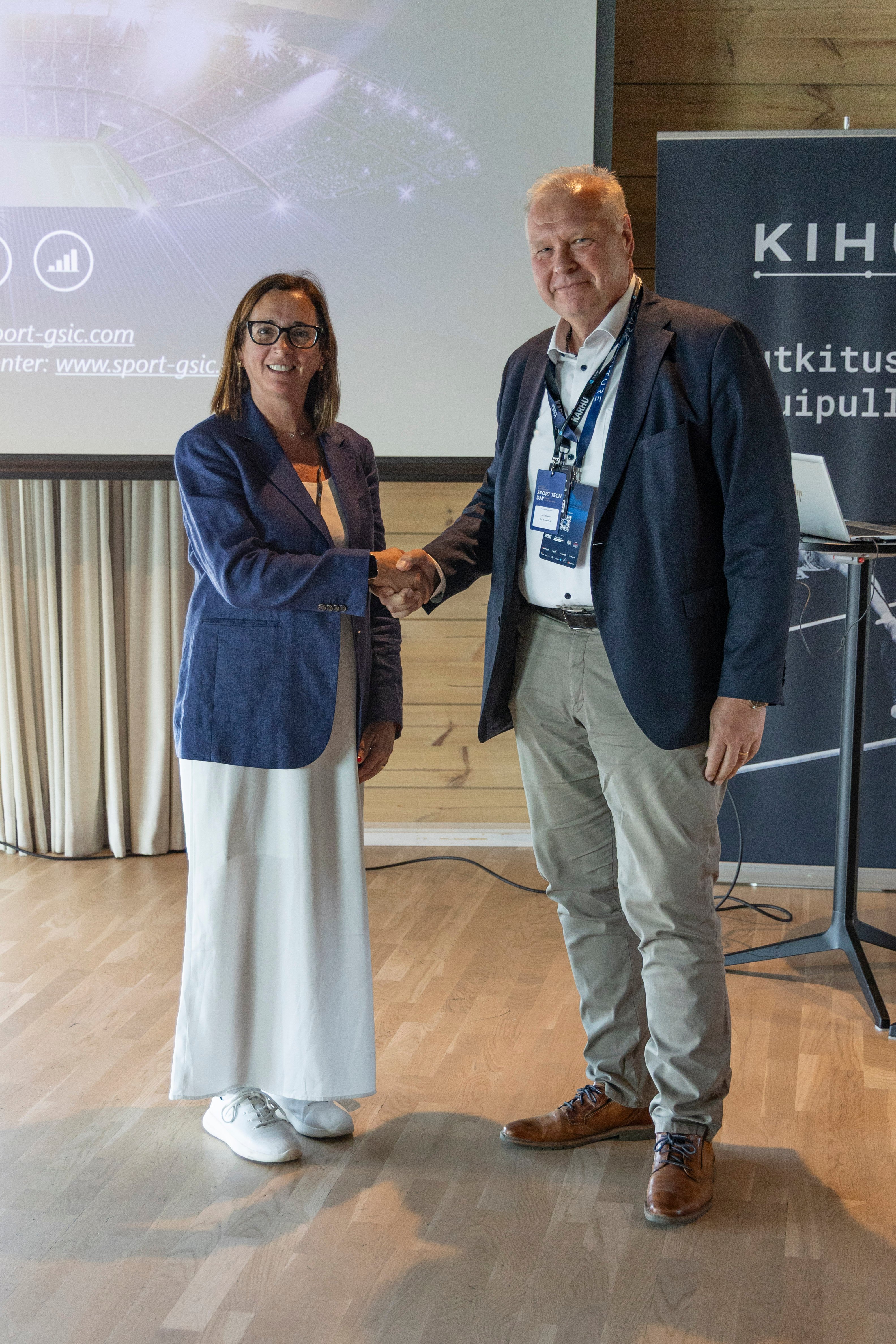 Iris Córdoba and Ari Tolonen. Photo: City of Jyväskylä/Alpertti Rieskjärvi
From ecosystem to action
The pitching session brought all of these ideas down to the level of actual companies.
Five startups took the stage. Jyväskylä based Nro.one, Psyon Games and Vaara Coaching
were joined by Tampere based MoniCardi and French company INRACE. Their solutions
represented very different sides of sport technology, including athletic performance,
health technology, wellbeing, gamified health solutions and immersive digital motorsport
experiences.
The pitches were evaluated by an international jury consisting of Iris Córdoba from GSIC,
Audra Shallall from EBAN Sports, Kaarlo Kankkunen from Veikkausliiga, Aitor Jiménez
from Baskonia Alavés Group, Davorin Štetner from the Croatian Investors and Business
Angels Association and Albert Colomer from the Catalonia Business Angels Network.
There were two winners at the end of the session.
INRACE won the EBAN Sports award, giving the French company the opportunity to
present at an international EBAN Sports event in autumn 2026 or spring 2027. The
company is developing immersive VR experiences for rally and circuit racing, which felt
particularly fitting given the wider Rally context surrounding the event.
MoniCardi received the second award and was given a collaboration opportunity with
The Faktory, the innovation unit of Baskonia Alavés Group. The opportunity includes
access to international networks, mentoring and the possibility of piloting its cardiac
health analytics solution with leading organisations in the sports industry.
For me, this was one of the strongest parts of the whole morning. The presentations had
spent hours talking about ecosystems, networks, innovation and internationalisation.
Then suddenly you could see what those words actually mean. A startup gets in front of
investors and industry experts, receives an opportunity to enter an international network
and potentially gets a chance to test its technology with major sports organisations.
That is what an ecosystem should ultimately be able to do.
Sport has spent decades learning how to improve performance one small step at a time. Startups have built their culture around doing much the same thing with products and businesses.
The next chapter for Hippos
The event also introduced the Hippos Sport Accelerator, a new initiative being developed
by the City of Jyväskylä, JAMK University of Applied Sciences and KIHU. The accelerator is
designed to bring companies, investors, researchers and international networks together
and support startups and small and medium sized companies in developing their
products, growing their businesses and reaching international markets.
And this is probably where the bigger story lies.
Jyväskylä already has the ingredients. It has universities, research expertise, sports
organisations, athletes, companies and a strong history in sports and physical activity.
What has been missing is not necessarily the individual pieces, but the connections
between them.
The new Hippos creates an opportunity to connect those pieces physically, while
initiatives such as GSIC membership and the Hippos Sport Accelerator can create the
international and commercial connections around them.
That could turn Hippos into something much more interesting than a place where people
come to train or watch sport. It could become a place where a researcher meets a
startup, where an athlete helps test a new technology, where an investor discovers a
company and where an international sports organisation finds a Finnish innovation worth
taking to the world.
That is also why the comparison between sport and startups from the beginning of the
day makes sense.
Both are built on performance. Both involve uncertainty. Both require people who are
willing to learn from failure. And both become stronger when they have the right team
around them.
Sport has spent decades learning how to improve performance one small step at a time.
Startups have built their culture around doing much the same thing with products and
businesses.
Perhaps the most interesting future is what happens when those two cultures stop
learning separately and start learning from each other.
Walking away from Sport Tech Day, that was the idea I kept coming back to. The real
opportunity for Jyväskylä is not simply to become better at sport technology. It is to
become a place where sport technology can actually be built, tested, funded,
commercialised and taken to the world.
And if the conversations at Sport Tech Day are any indication, that process has already
started.
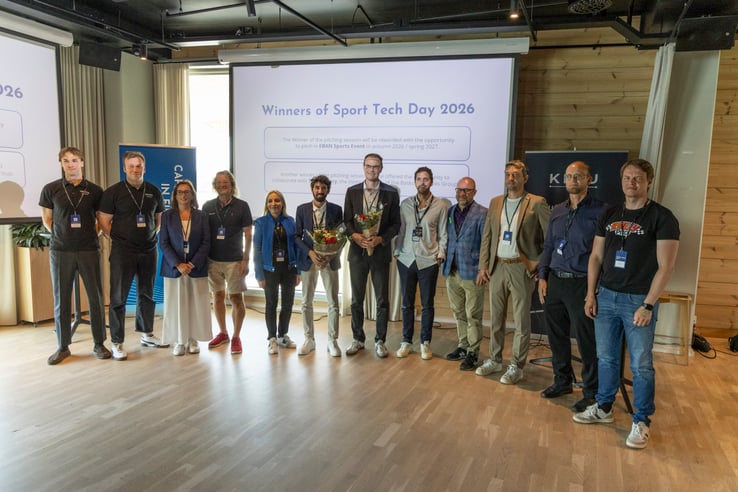 Photo: City of Jyväskylä/Alpertti Rieskjärvi
This article was written by Saad Saqib, International Coordinator at Jyväskylä Entrepreneurship Society.