Fuji Hydrogen Summit 2026 Strengthens Jyväskylä’s Position as an International Hydrogen Economy Pioneer
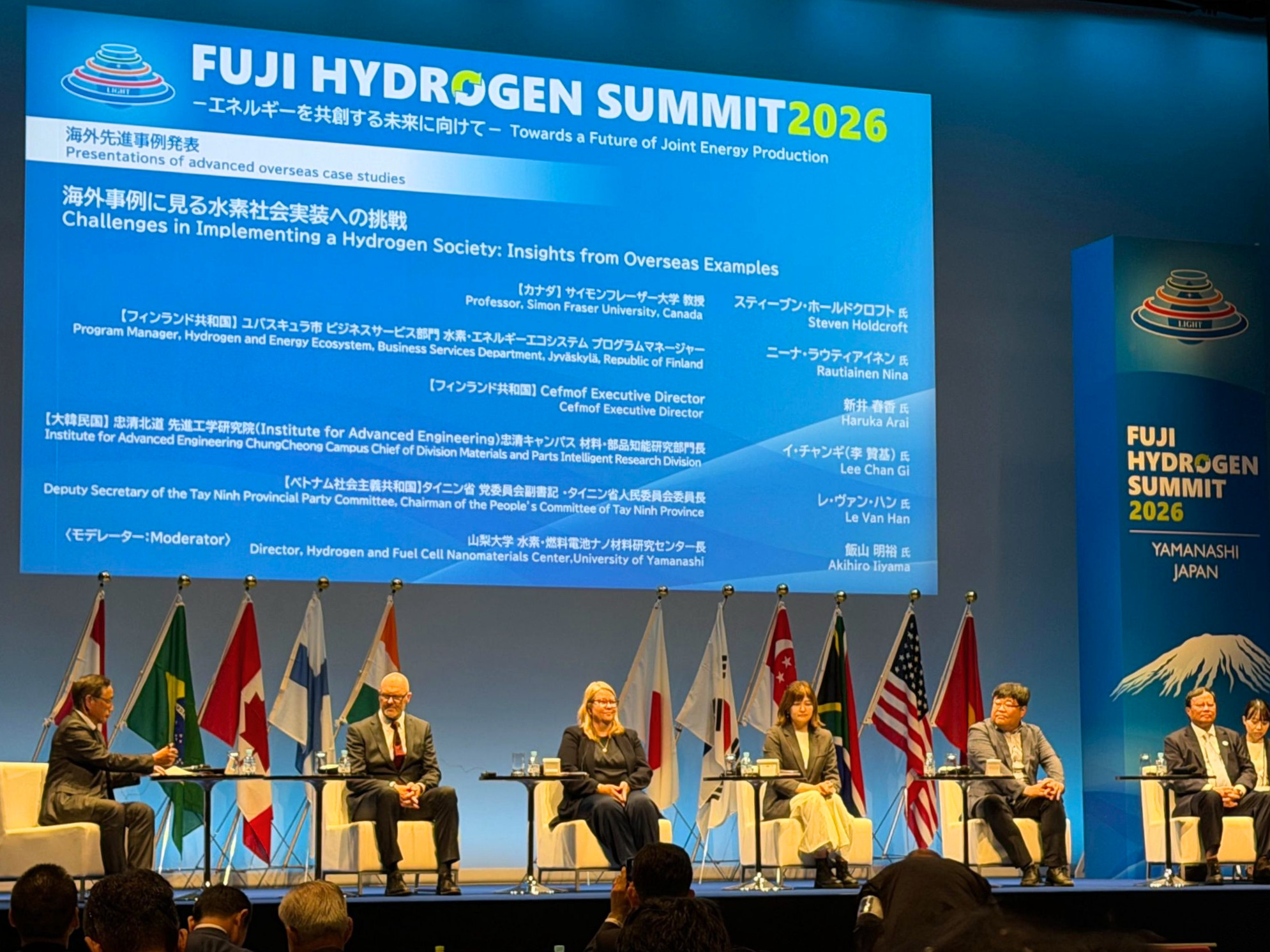
Representatives from the City of Jyväskylä, Cefmof, and the University of Jyväskylä participated in the Fuji Hydrogen Summit 2026, held in Japan in October. The international summit brought together hydrogen economy stakeholders from around the world and was organised by Yamanashi Prefecture, with a particular focus on the practical deployment of hydrogen solutions in society.
Jyväskylä was invited to the event following a visit by representatives of Yamanashi Prefecture to Jyväskylä in spring 2026, during which they explored the region’s hydrogen pilots and practical use cases.
Jyväskylä’s Hydrogen Solutions Attracted International Interest
During the summit, Jyväskylä presented its hydrogen economy development as a European example of how a mid-sized city can simultaneously build hydrogen demand, infrastructure, and an innovation ecosystem.
The key message from Jyväskylä was the transition from discussions on hydrogen technologies to practical implementation. Featured examples included the hydrogen corridor for heavy-duty transport, the Cefmof Hydrogen refuelling station, regional demonstration projects, and the work of the H2 Innovation Alliance in connecting research organisations and businesses. H2 Innovation Alliance is a regional partnership bringing together research organisations, public actors, and businesses to advance hydrogen economy innovation and position Central Finland as a leading hydrogen hub.
Particular interest among international participants was generated by Jyväskylä’s real-world pilot environments and practical demonstrations. The Hydrogen Sauna concept also attracted attention as an innovative example of bringing hydrogen solutions closer to everyday life.
Expertise and Collaboration in Focus
The first day of the summit featured an international panel discussion examining the prerequisites for the societal adoption of hydrogen. Key themes included skills development, workforce availability, and the social acceptance of hydrogen technologies. The panel included representatives from Brazil, South Korea, India, Austria, Canada, and Vietnam.
On the second day, international case studies highlighted the development of the hydrogen economy in Jyväskylä, ongoing investments in the region, and collaborative models for integrating hydrogen into future energy and transport systems.
New Opportunities for Research, Business, and Investment Cooperation
One of the most significant outcomes of the visit was the establishment of several new collaboration opportunities with Japanese stakeholders.
The City of Jyväskylä and Yamanashi Prefecture identified opportunities to deepen cooperation in areas such as research, development and innovation activities, as well as skills development. At the same time, a connection was established between the University of Yamanashi and the University of Jyväskylä. This creates opportunities for international research collaboration and future initiatives linked to the H2 Innovation Alliance.
The summit also strengthened connections with the Tokyo metropolitan area. The Tokyo Metropolitan Government works closely with Yamanashi Prefecture, and discussions will continue in the coming months regarding opportunities for startup collaboration, investor engagement, and innovation partnerships.
Exploring Practical Hydrogen Economy Solutions
As part of the summit programme, participants visited several hydrogen economy sites in the Yamanashi region. The programme included a visit to the Maglev Test Center, where the technology behind the world’s fastest train was presented, as well as a visit to a production facility operated by Kosé Holdings, where hydrogen is utilised in industrial manufacturing.
The visit to Kosé Holdings provided an interesting investment perspective, as the company already uses hydrogen in its production processes and is exploring opportunities to expand its operations in Europe.
The delegation also visited the Komekurayama Power-to-Gas Demonstration Site, where solar-generated electricity is used for hydrogen production, storage, and utilisation as part of regional energy infrastructure.
Collaboration Continues in Jyväskylä in 2027
Fuji Hydrogen Summit 2026 strengthened Jyväskylä’s position as an internationally recognised hydrogen economy development environment and increased the region’s visibility within global hydrogen networks. At the same time, it laid the foundation for new research, business, and investment partnerships between Finland and Japan.
As a next step, a return visit by representatives from Yamanashi Prefecture to Jyväskylä is being planned for spring 2027. The aim is to deepen the connections established during the summit and advance the launch of concrete joint initiatives in hydrogen economy development, research, and business cooperation.
Further information:
Nina Rautiainen
Programme Manager, hydrogen business development
p. +358 50 413 7028

This article is part of the ecosystem work carried out by the City of Jyväskylä’s Business Development Services. The ecosystem work is implemented with public funding under the Ministry of Economic Affairs and Employment’s Ecosystem Agreement for the years 2021–2027, in cooperation with local higher education institutions and other regional development organisations.
The project is funded by the Regional Council of Central Finland.